


 Tiếng Việt
Packaging is one of the most important steps in moving agricultural products from farms and packing facilities to distributors, supermarkets, and export markets. A pallet may contain fresh vegetables, fruit cartons, seedlings, fertilizer bags, or other farm supplies. Without proper wrapping, the load can shift, collapse, collect moisture, or become damaged during handling and transportation.
Two commonly considered packaging materials are pallet netting and PE stretch film. Both help stabilize goods on a pallet, but they do not perform in exactly the same way. Pallet netting has an open structure that allows air to move through the load, while conventional PE stretch film forms a much more continuous outer layer.
So, which one should you use? The answer depends on the product, storage conditions, transport distance, required protection, and whether ventilation is more important than a sealed outer wrap.
What Is Pallet Netting? Main Characteristics Of Pallet Netting
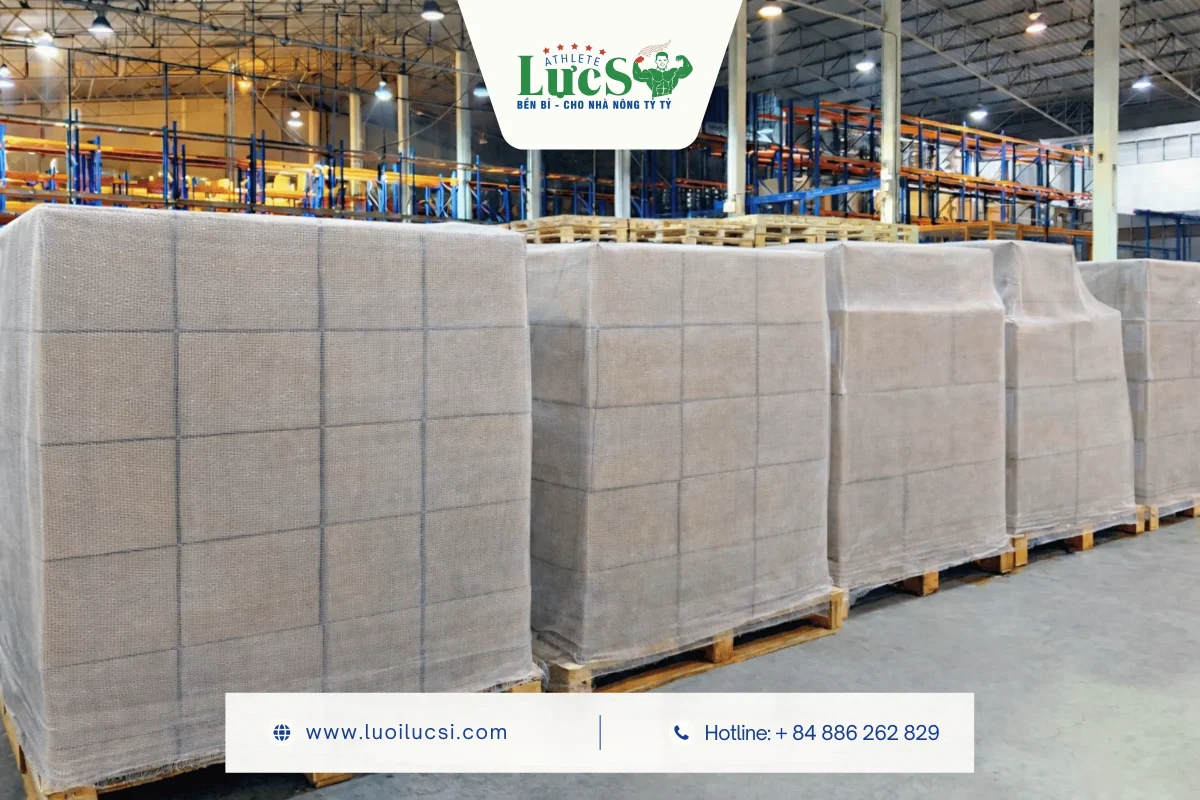
Pallet netting, also called pallet wrap net or pallet net wrap, is an elastic plastic net designed to hold goods together during storage and transport. Its interwoven structure wraps around cartons, bags, trays, or other palletized products while leaving open spaces for air circulation.
Lực Sĩ’s pallet netting is made from virgin PE/HDPE with UV and oxidation protection. The product is available in white and transparent, offers high stretch and strong pallet grip, and can be customized according to the pallet configuration .
The open construction is particularly useful for products that need to breathe, release heat, or avoid excessive condensation. It is commonly considered for fresh produce, agricultural supplies, fertilizer bags, nursery materials, and export pallets where air exchange is important.
- Open mesh structure for improved ventilation.
- High elasticity for wrapping and load containment.
- Helps keep cartons, bags, and packages together during movement.
- Can reduce moisture trapping compared with a fully enclosed film wrap.
- Suitable for hand wrapping or packaging equipment, depending on the product specification.
- May be customized in width and other dimensions according to pallet requirements.
- Requires correct tension and wrapping technique to achieve reliable stability.
Pallet netting is not a waterproof cover and should not be treated as a replacement for a rainproof outer package. If the load must be protected from direct rain, fine dust, or liquid contamination, an additional cover or suitable film may still be required.
>>> See more: Specialized Pallet Wrap For Warehouse & Export
What Is PE Stretch Film? Main Characteristics Of PE Stretch Film
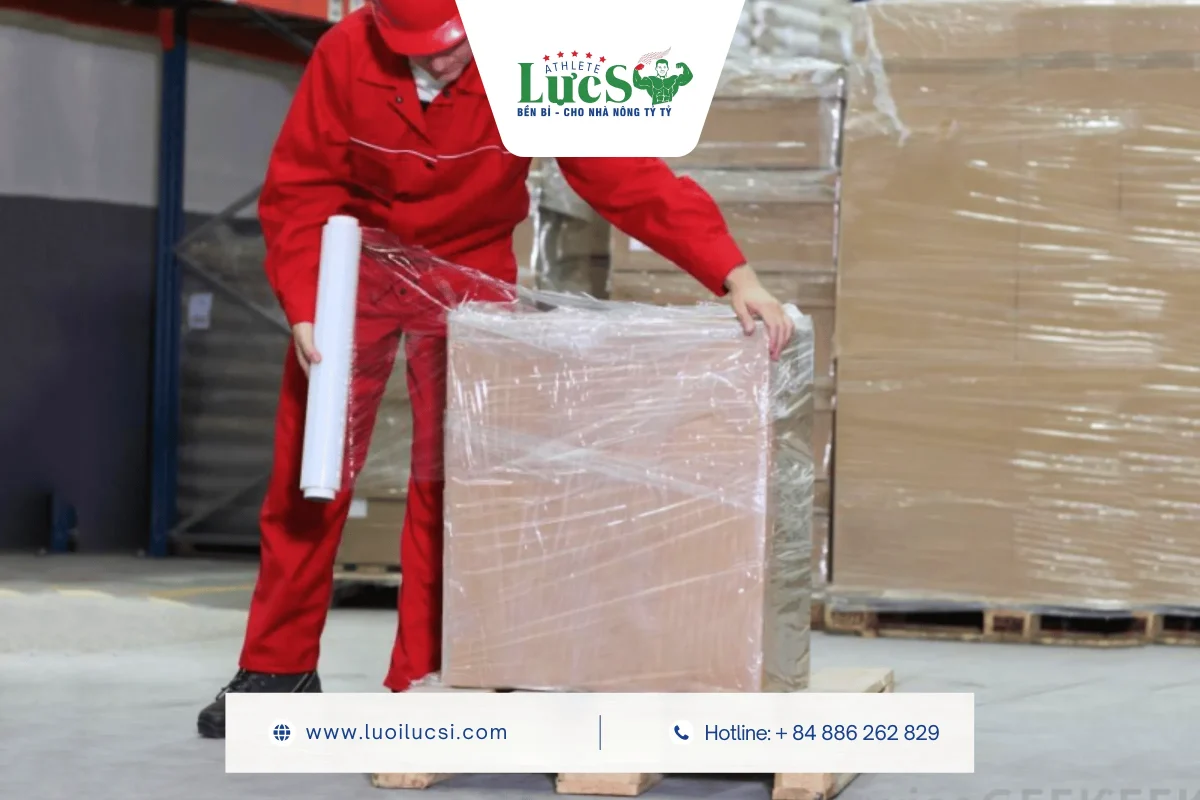
PE stretch film is a flexible polyethylene film that is stretched around a pallet to create a continuous layer. Its elasticity and cling help hold packages together and reduce movement during handling, loading, unloading, and transportation.
Conventional stretch film is useful when a pallet needs a more enclosed outer wrap. It can help protect the load from surface dust, minor splashes, abrasion, and loose packaging. It also makes a pallet easier to identify and handle as one unit.
However, a solid film layer can reduce ventilation. Fresh agricultural products may continue to release heat and moisture after harvest. If the film is applied too tightly or the load is wrapped before it has cooled, condensation can form inside the package. This may increase the risk of wet cartons, mold, surface deterioration, or reduced shelf life, depending on the commodity and storage conditions.
- Creates a continuous outer layer around the pallet.
- Provides strong surface containment and load stability.
- Helps protect against dust, light splashes, and external friction.
- Suitable for many general warehouse and logistics applications.
- Can be applied by hand or with a wrapping machine.
- Available in different thicknesses, widths, and stretch levels.
- May restrict airflow if applied as a completely closed wrap.
Vented or perforated stretch film can provide more air exchange than conventional solid film. It may be an option when the user needs some ventilation together with film-style containment. The performance still depends on the perforation pattern, product, wrapping method, and cold-chain conditions.
When Should You Use Pallet Netting For Agricultural Products?
1. Fresh Vegetables And Fruit That Need Airflow
Fresh produce remains biologically active after harvest. It can release heat, moisture, and gases while in storage or transit. A breathable pallet wrap can help air move through the load and reduce the risk of excessive condensation compared with a tightly sealed film wrap.
Pallet netting may be suitable for products such as:
- Leafy vegetables and boxed vegetables.
- Fruit packed in cartons, trays, or ventilated crates.
- Produce moving through refrigerated storage.
- Agricultural products that must be cooled after packing.
- Harvest containers that require temporary stabilization before final dispatch.
The net should be applied after the product has been inspected, cooled where required, and packed in a stable pattern. It should not be used to conceal wet, damaged, or poorly ventilated produce.
2. Cold-Chain And Refrigerated Shipments
Air movement is important in many cold-chain operations. If a pallet is wrapped with solid film, the outer layers may reduce the movement of cold air through cartons or crates. Pallet netting allows refrigeration air to reach more of the load, although the exact result depends on the pallet design and the airflow pattern in the cold room or truck.
Pallet netting does not guarantee faster cooling or a longer shelf life. Those outcomes depend on pre-cooling, product temperature, carton ventilation, storage humidity, loading arrangement, and the cold-chain process. It is best viewed as a packaging aid that supports airflow, not as a substitute for temperature management.
3. Products That Are Warm Or Prone To Condensation
Some agricultural products are packed soon after harvesting or processing. If a warm load is wrapped in a solid film layer, moisture may condense inside the wrap as the temperature changes. A breathable net may be a better first-stage wrap when the load needs to cool, stabilize, or release moisture before final shipment.
If the product is wet, leaking, or highly sensitive to contamination, the packaging system should be redesigned rather than relying on netting alone. Correct drainage, drying, liners, absorbent materials, and suitable cartons may be necessary.
4. Fertilizer Bags, Nursery Materials, And Farm Supplies That Need Moisture Release
Pallet netting is not limited to fresh produce. Fertilizer bags, seedling trays, plant materials, and other farm supplies may also benefit from a wrap that holds the load while allowing air movement. This can be helpful when materials are stored in a warehouse or moved between farm, distributor, and customer.
The product must still be compatible with the open structure. Fine powder, small loose components, or materials that must remain completely dry may require an inner bag, liner, or PE film layer.
5. Export And Long-Distance Agricultural Logistics
For export shipments, the packaging decision should consider the full route: farm, packing house, cold storage, container, port, distributor, and final customer. Pallet netting can help reduce condensation and support airflow, but it does not provide complete protection from humidity, rain, salt air, or container conditions.
Exporters should confirm the packaging requirements of the buyer, carrier, destination market, and product-specific quality program. A combined system may be appropriate when the pallet needs breathable stabilization at one stage and stronger environmental protection at another.
When Should You Use PE Stretch Film?
1. When Surface Protection Is A Priority
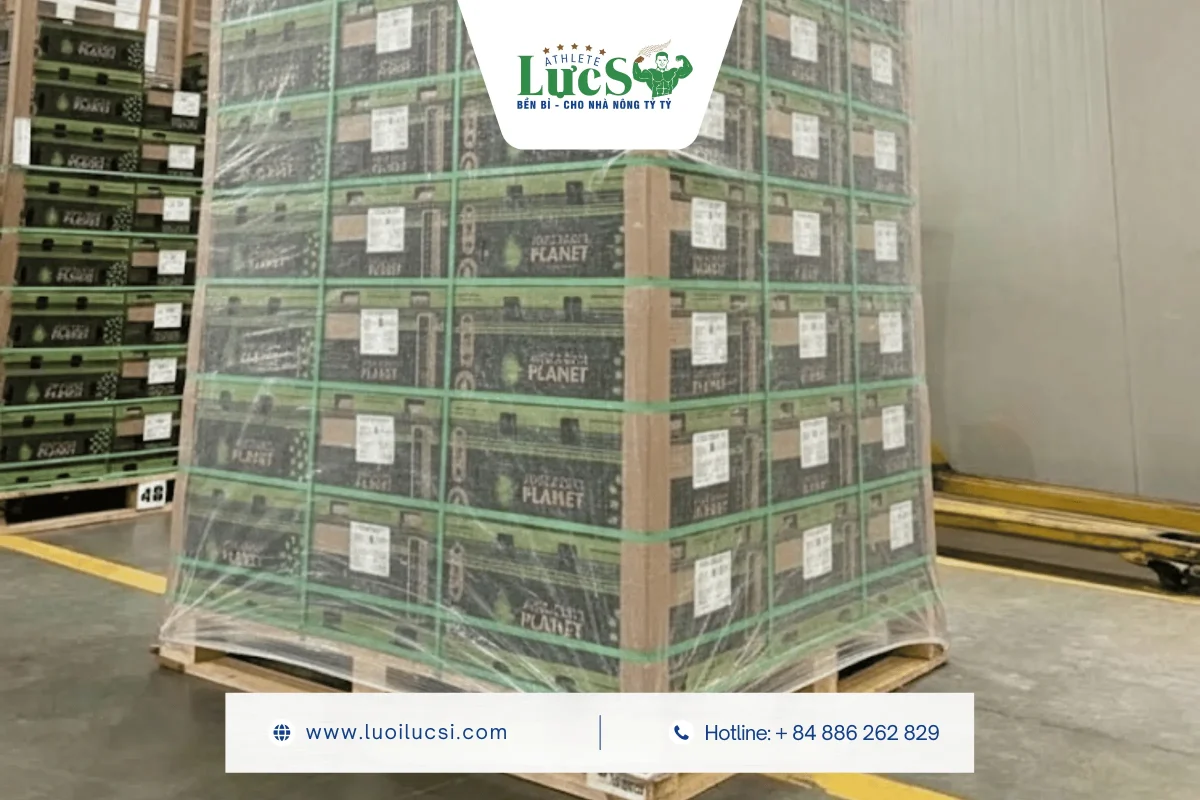
PE stretch film creates a more continuous outer layer and can help reduce contact with dust, minor splashes, loose dirt, and abrasion during warehouse handling. It may be preferred for packaged products that do not require significant ventilation.
For agricultural goods, film should be applied only after the load is dry, stable, and at a suitable temperature. Wrapping a hot or wet pallet can create problems inside the package.
2. When The Pallet Contains Mixed Cartons Or Irregular Packages
Stretch film can conform closely to different package shapes and help bind mixed cartons into a single unit. Its cling and elastic recovery may provide strong containment around irregular loads, especially when machine wrapping is available.
Pallet netting can also stabilize many irregular loads, but the correct net tension, overlap, and number of passes are essential. If packages have sharp corners, the wrapping material should be tested first to reduce the risk of tearing.
3. When The Load Must Be Protected From Loose External Contamination
A continuous film layer generally offers more surface protection than an open net. This may be important for cartons or packaging that must remain visually clean during warehouse storage and distribution.
Film is still not a guarantee against contamination. Pallets should be stored in clean, dry facilities and protected from chemicals, pests, standing water, and damaged cartons.
4. When The Product Does Not Need Ventilation
Non-perishable agricultural supplies, empty packaging, dry goods, and some bagged materials may not require the same level of air exchange as fresh produce. In such cases, the containment and protection benefits of PE stretch film may outweigh its lower breathability.
Can Pallet Netting And PE Stretch Film Be Used Together?
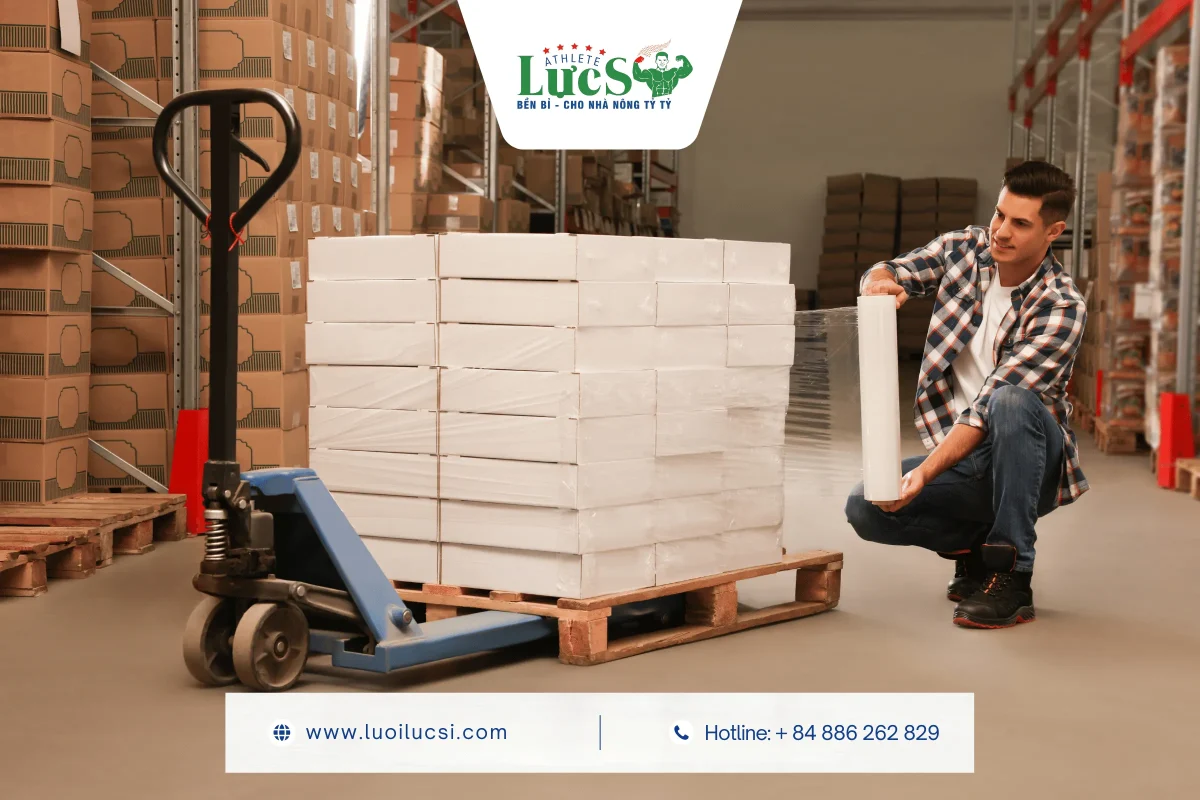
Yes. A combined packaging approach can be useful when the load requires both airflow and additional outer protection. For example, pallet netting may first stabilize the product and allow it to cool, while a limited film layer or protective cover is added later for a specific transport stage.
Possible combinations include:
- Pallet netting only: for breathable temporary stabilization and refrigerated handling.
- PE stretch film only: for dry, stable loads that need stronger surface containment.
- Netting plus partial film: for a balance between airflow and protection.
- Netting plus a top sheet or rain cover: for products that need ventilation at the sides but additional protection from overhead moisture.
- Vented stretch film: when the buyer needs film containment with designed air openings.
The combination should be tested with the actual product and route. Adding more material does not automatically improve packaging. Excessive wrapping may increase cost, labor, material use, and condensation risk.
>>> See More: Why Pallet Wrap Net is the Ultimate Alternative to Traditional Stretch Film?
Why Choose Lực Sĩ Pallet Netting?
Lực Sĩ is a direct manufacturer and supplier of agricultural, plastic, packaging, construction, and aquaculture products. Its pallet netting is made from virgin PE/HDPE with UV and oxidation protection. The net is designed for high stretch, strong pallet grip, and breathable load stabilization .
Lực Sĩ can discuss pallet-specific requirements such as:
- Product type and package format.
- Pallet width, height, and load pattern.
- Required net width and roll configuration.
- Expected transport and storage conditions.
- Fresh produce, agricultural supply, warehouse, or export applications.
- Custom specifications for farms, cooperatives, distributors, and B2B buyers.
For a quotation, contact Lực Sĩ via Hotline/Zalo: +84 886 262 829. Provide the product type, pallet dimensions, estimated quantity, wrapping method, destination, and whether ventilation or surface protection is the main priority
——————————
FOR ALL INQUIRIES, PLEASE CONTACT:
HEADQUARTERS – LỰC SĨ NHÀ NÔNG
☎️ Phone: +84 886 262 829
📤 Representative Office: 527 – 529 Binh Thoi, Binh Thoi Ward, Ho Chi Minh City (formerly District 11)
🏭 Factories: Dong Thap & Tay Ninh (formerly Long An & Tien Giang)
🌐 Website: https://luoilucsi.com/
🌿 Facebook: https://www.facebook.com/lucsinhanong
🎥 Youtube: https://www.youtube.com/@lucsinhanong7833


